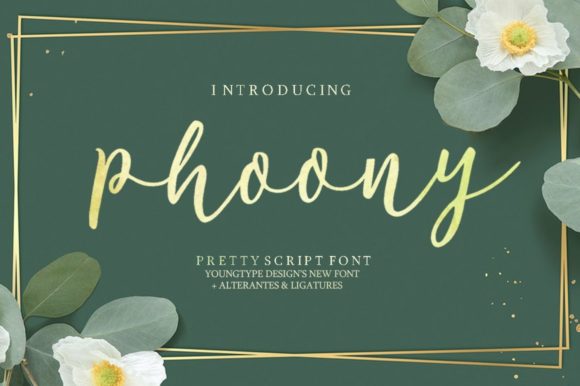
Phoony: A Handwritten Font for Editorial Design
Phoony is a hand-brushed handwritten font that brings a unique, irregular baseline to any design project. Its organic, expressive style makes it ideal for bold lettering in blog headers, posters, wedding elements, t-shirts, and more. As a script font within the Script Amp collection, Phoony adds personality and visual interest without sacrificing clarity.
For publishers, bloggers, and editorial designers, Phoony offers a versatile tool for creating eye-catching layouts. Its natural variation mimics real handwriting, giving content a personal and authentic feel. Whether used in headlines, cover designs, or graphic elements, Phoony enhances the visual tone of publications while maintaining readability across different formats.
Phoony in Editorial Layouts
When used in blog headers, Phoony can draw attention and set the tone for an article. Its dynamic strokes and irregular baseline make it stand out from standard serif or sans serif fonts. For magazine covers, Phoony adds a touch of creativity and elegance, making it perfect for lifestyle, fashion, or creative content.
In ebook titles and chapter openers, Phoony provides a distinctive look that helps readers identify sections at a glance. It works well as a pull quote or accent typography in newsletters, where its handwritten charm can highlight key messages or quotes. For printable guides and worksheets, Phoony adds a personal, artisanal quality that resonates with readers looking for thoughtful design.
Supporting Visual Hierarchy and Brand Identity
Phoony excels as a display font, making it ideal for headings, subheadings, and section markers. Its irregular baseline and fluid motion create a sense of movement that can guide readers through content. When paired with a readable serif or sans serif font for body copy, Phoony becomes a powerful tool for establishing visual hierarchy and brand identity.
For example, a lifestyle blog might use Phoony in its main title and section headings, while relying on a clean sans serif font for articles. This combination balances creativity with legibility, ensuring that the content remains accessible across devices and platforms. In a recipe ebook, Phoony could appear in title pages and ingredient lists, adding a warm, handmade feel to the design.
Practical Use Cases for Phoony
Wedding guides often benefit from Phoony’s elegant, personal touch. Using it in invitations, welcome pages, or ceremony details can reinforce the theme and create a cohesive visual language. Similarly, coaching workbooks or printable planners can leverage Phoony to add a custom, branded look that feels intentional and professional.
Digital magazines and newsletters can incorporate Phoony in headlines, callout boxes, or social media graphics. Its versatility allows it to adapt to both digital and print formats, making it a valuable addition to any designer’s toolkit. For lead magnets or downloadable content, Phoony can be used in title graphics to catch attention and encourage downloads.
Readability and Cross-Platform Performance
While Phoony is best suited for short text elements, it can still be used effectively in longer passages when paired with appropriate supporting fonts. On screens, its irregular baseline may affect readability if overused, but as a display font, it maintains clarity and impact. In PDF exports, Phoony retains its character, ensuring that printed materials reflect the intended design.
On mobile layouts, Phoony’s size and spacing should be adjusted to maintain legibility. For print, consider using it in larger sizes for headlines or logos. Its multilingual support ensures that it can be used across different languages and scripts, expanding its utility for global audiences.
Font Pairing and Design Assets
Pairing Phoony with a complementary font enhances its effectiveness in editorial design. A classic serif font like Georgia or Times New Roman can balance its informal nature, making it suitable for body text. A clean sans serif like Helvetica or Roboto works well for captions, navigation, or secondary information.
Designers should explore the included styles, alternates, and ligatures to maximize Phoony’s potential. These features allow for greater customization and ensure that the font adapts to different design needs. Whether used in logo design, packaging, or web projects, Phoony offers a fresh alternative to standard typefaces.
Commercial Licensing and Usage
Phoony is available as a commercial font, making it suitable for a wide range of projects. Publishers, ebook creators, and digital product designers can use it in paid newsletters, templates, printables, and client publications. Always check the licensing terms to ensure compliance with specific usage requirements.
As a premium font, Phoony stands out for its unique aesthetic and practical application. Its handwritten style adds character to editorial work, helping brands and creators establish a distinct visual identity. Whether used in blog headers, cover designs, or graphic elements, Phoony supports both artistic expression and functional design.